

Machined vs. Cast Lead Bricks: Which Is Better for Radiation Shielding?
Machined and cast lead bricks can both be used for radiation shielding, but they serve different project needs. Cast bricks are often suitable where standard sizes and lower cost are the priority. Machined bricks are generally better when the project requires tighter dimensions, cleaner edges, custom shapes, or interlocking features that need to fit closely together.
Cast Lead Bricks
Cast lead bricks are made by melting lead and pouring it into a mould. After cooling, the brick is removed and finished as required.
Casting is typically more economical for standard sizes and simple shapes. However, some variation in the finished surface, edges, and dimensions can occur as the metal cools and shrinks.
For straightforward shielding layouts where exact dimensions are less critical, cast bricks can be a practical option.
Machined Lead Bricks
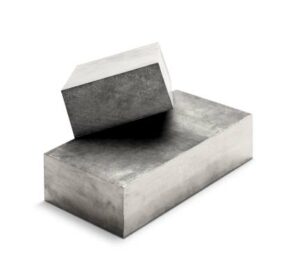
Machined lead bricks are finished after the lead has been formed into a solid block. CNC machining can then be used to produce specific dimensions, cleaner edges, custom shapes, and detailed interlocking features.
This gives the manufacturer more control over the final brick. It is especially useful where the bricks need to fit closely together or where standard sizes do not suit the shielding layout.
Machining does not make the lead itself better at radiation shielding. The advantage comes from greater control over the brick’s finished size, shape, and fit.
Which Option Provides Better Accuracy and Fit?
Machined bricks generally provide better dimensional accuracy than cast bricks.
With casting, the finished dimensions depend on the mould and how the lead behaves as it cools. Machining allows the brick to be brought to a more specific finished size after solidification.
That difference can matter around equipment, restricted spaces, custom openings, or other areas where small dimensional variations may affect installation.
Interlocking and Custom Lead Bricks
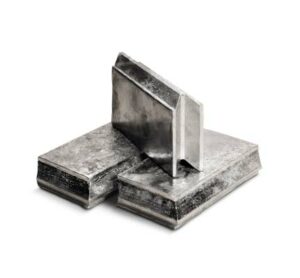
Machining is particularly useful for Chevron and Circular Interlocking lead bricks because these designs rely on shaped edges that need to fit together consistently.
CNC machining also makes it easier to produce non-standard dimensions and custom shapes. This allows the bricks to suit the shielding layout instead of requiring the project to work only with standard sizes.
Ultraray offers Flat, Chevron Interlocking, Circular Interlocking, and custom CNC-machined lead bricks in 99.9% pure lead. Antimonial lead is also available where additional hardness is required.
Cost and Finished Quality
Cast bricks are generally less expensive because they require fewer finishing steps. Machined bricks typically cost more because of the additional processing involved.
However, machining can provide cleaner edges, more consistent dimensions, and greater flexibility for custom work. For simple layouts, cast bricks may be sufficient. For more precise or specialized shielding designs, machining is often the better fit.
Lead Handling and Coated Finishes
Both casting and machining require proper controls during manufacturing.
For finished lead bricks on site, appropriate gloves, workplace procedures, and hand washing should be followed. Painted, powder-coated, and vinyl-coated finishes are also available for customers who prefer a covered lead surface.
For projects where standard sizes are sufficient, cast lead bricks can remain a practical and economical choice. Where fit, custom dimensions, cleaner edges, or interlocking features matter, CNC-machined lead bricks generally provide greater control over the finished result.
Contact Ultraray Radiation Protection to discuss whether cast or machined lead bricks are better suited to your shielding requirements.