

Everything About Lead Shot for Radiation Shielding

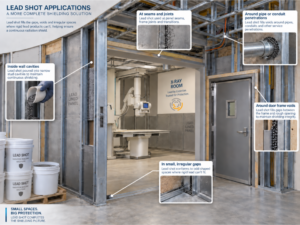
Lead shot is a fine, pourable form of lead used for radiation shielding where rigid products may be difficult to install. The individual pellets can flow into cavities, seams, bags, and irregular spaces that lead bricks or sheet lead may not suit.
As a result, lead shot works well for localized shielding, gap filling, and custom fabrication. It is commonly used in nuclear, aerospace, industrial, laboratory, and other specialized radiation protection environments.
Lead Shot for Radiation Shielding
Lead shot gives designers and fabricators a flexible way to add shielding around difficult shapes and confined spaces.
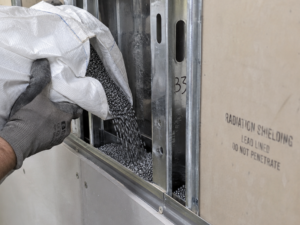
Rather than cutting a solid lead component to fit every cavity, installers can pour shot directly into an enclosed area. It can also be placed into fabricated bags or containers.
This makes lead shot particularly useful around equipment housings, wall cavities, seams, narrow gaps, and irregular shapes.
However, loose lead shot does not pack at the same density as solid lead. Small spaces remain between the pellets. Therefore, designers need to consider the packed density and required shielding thickness when specifying a complete assembly.
How Big Is an Individual Pellet?
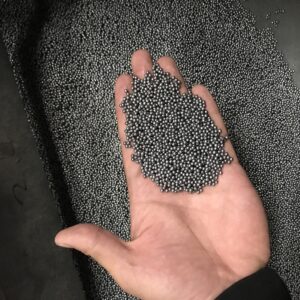
Our available pellets can differ in sizes based on client needs. Smaller pellets can fit in narrower gaps, cavities, and seems a lot easier than larger pellets, obviously. And so, for a spherical lead pellet measuring approximately 2.3 mm in diameter, the approximate dimensions are:
|
Measurement |
Approximate value |
|
Diameter |
2.29 mm / 0.090 in |
|
Radius |
1.15 mm / 0.045 in |
|
Circumference |
7.19 mm / 0.283 in |
|
Weight per pellet |
0.071 g |
|
Weight per pellet |
1.10 grains |
|
Pellets per ounce |
about 400 to 410 |
The calculated pellet weight assumes a spherical pellet and a lead density of approximately 11.34 g/cm³. Actual pellet size and weight can vary based on manufacturing tolerance and material composition.
If you want to calculate the approximate weight of a specific lead shape or size, Ultraray also provides a Lead Weight Calculator for quick project estimates.
**Actual pellets may vary slightly in size and weight. Should you desire a different pellet size, feel free to ask.
How Many Pellets are in a 25 lb or 50 lb Bag?
Ultraray can supply 25 lb and 50 lb bags, with other custom quantities available at Ultraray’s discretion based on project requirements.
Using nominal 2.3 mm pellets, the approximate quantities work out to:
- 25 lb bag: about 1,000+ pellets
- Custom weight upon request
These figures are estimates rather than packaging specifications. Pellet count will vary with actual pellet size, material composition, and manufacturing tolerances.
For larger shielding projects, custom packaging or bulk quantities may make more sense than individual bags.
Where Is it Commonly Used?
It is particularly useful where shielding must conform to the available space.
Typical uses include filling wall cavities, seams, equipment voids, and fabricated shielding containers. It can also provide localized shielding around radiation sources or equipment.
In addition, industries such as nuclear, aerospace, NDT, laboratory, and industrial manufacturing may use lead shot where rigid shielding shapes would be difficult to position.
The container itself also matters. Bags, cavities, or fabricated housings need to keep the shot contained and properly positioned throughout the intended service life.
Lead Shot vs. Lead Bricks
Lead shot and lead bricks solve different shielding problems.
Lead bricks provide rigid, modular shielding for walls, barriers, booths, and other structures. Lead shot provides greater flexibility when installers need to fill a curved space, narrow seam, enclosed void, or irregular cavity.
For that reason, a shielding project may use both. Bricks can form the primary barrier, while shot fills areas that are difficult to address with solid components.
Can Lead Shot Be Melted and Cast?
Yes. it also works as a convenient feed material for casting.
Its small pellet size makes it easy to measure, load, and melt. Manufacturers can then cast the molten lead into custom components, repair pieces, or other specialized forms.
Therefore, this product can serve both as a finished gap-filling material and as raw material for custom lead fabrication.
Handling and Containment
Because lead shot consists of loose pellets, proper containment is important.
Workers should keep the material inside suitable bags, enclosed cavities, or fabricated containers to reduce movement and spillage. Appropriate gloves, workplace procedures, and hand washing should also form part of normal lead handling practices.
Ultraray supplies lead shot for radiation shielding, gap filling, casting, and custom fabrication in 25 lb, 50 lb, and other custom quantities at our discretion. Contact Ultraray Radiation Protection to discuss the required quantity, packaging, and intended use for your project.