
Lead-Lined Generator and Storage Cabinet


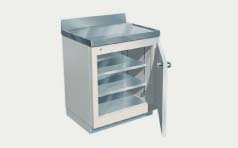
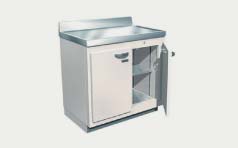
Shielded hot lab cabinet designed to support generator elution while providing integrated storage for active and decaying generators.
Key features and benefits
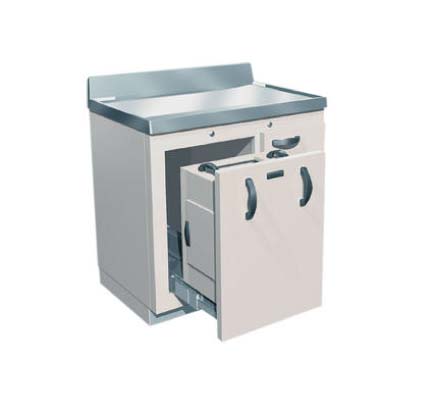
Dedicated generator drawer – accommodates top- or side-loading generators without interrupting the elution process
0.5-inch or 1-inch front lead shielding – provides enhanced shielding at the primary access point
0.25-inch lead shielding on sides and bottom – supports consistent radiation protection around the generator
Removable drawer top – allows safe and efficient generator replacement
Trap doors on top and sides – provide controlled access to the generator during use
Two shielded storage compartments – allow decaying generators to be stored separately prior to disposal
Integrated cabinet design – combines active generator use and decay storage in one footprint
Product overview
The lead-lined generator and storage cabinet is designed to provide radiation protection in nuclear medicine hot labs without interfering with generator elution workflows. The left-side drawer accommodates both top-loading and side-loading generators, allowing facilities to maintain flexibility in generator selection and placement.
The front of the drawer incorporates either 0.5-inch or 1-inch lead shielding, while the remaining three sides and bottom include 0.25-inch lead shielding. This configuration supports localized radiation protection where it is most critical. In addition, a removable drawer top simplifies generator replacement. Trap doors located on the top and sides of the drawer provide controlled access during operation.
On the right side of the cabinet, two shielded compartments are designed to store decaying generators prior to disposal. As a result, the cabinet supports both active generator use and decay management within a single, organized unit. The cabinet should be coordinated with surrounding shielding elements and room layout as part of a broader radiation protection strategy.
When to use this product
Use this product when:
Generator elution must occur within a shielded hot lab environment
Top- or side-loading generators are used
Decaying generators require shielded storage prior to disposal
Generator replacement must occur without disrupting workflow
Active use and decay storage need to be combined in one cabinet
Where this product is typically found
This cabinet is commonly used in:
Nuclear medicine hot labs
Radiopharmacy preparation areas
Hospital nuclear medicine departments
Generator handling and storage rooms