
Lead Wool

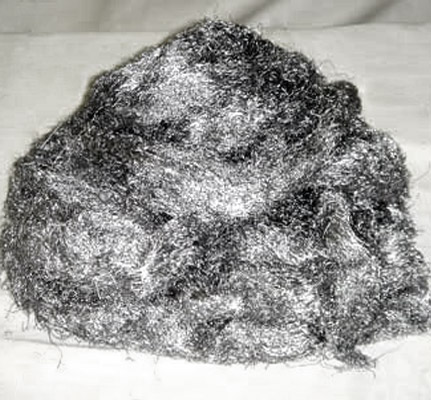
Flexible lead wool designed for filling gaps, seams, and irregular openings where rigid lead shielding products are not suitable.
Key features and benefits
Certified lead wool material – meets Federal Specification QQ-C-40
Fine-strand lead construction – consists of long, fine strands of chemical grade lead
Twisted 5/8-inch rope form – allows controlled placement into seams and openings
Ideal for irregular spaces – fills gaps where lead sheet, plate, or brick cannot be used
Flexible caulking-style shielding – adapts easily to complex geometries
Multiple packaging options available – supplied in 5 lb waterproof bags or 50 lb cartons
Product overview
Ultraray lead wool is a flexible radiation shielding material designed for applications where rigid lead products are impractical. It is manufactured from long, fine strands of chemical grade lead that are twisted into a 5/8-inch rope, creating a form of caulking lead that can be packed into openings, seams, and irregular spaces.
Because of its flexibility, lead wool is commonly used to fill voids around penetrations, between shielding components, or in locations where lead sheet, plate, or brick cannot provide complete coverage. As a result, it supports shielding continuity in complex or constrained installations.
Ultraray lead wool is certified to meet Federal Specification QQ-C-40 and is supplied in practical packaging options to suit different project sizes. It is available in 5 lb waterproof bags or 50 lb cartons. Approximately 2-1/2 feet of lead wool weighs 1 lb. Lead wool should be selected and installed as part of a broader radiation protection strategy and handled according to project requirements.
When to use this product
Use this product when:
Gaps or seams require flexible radiation shielding
Openings cannot be sealed with rigid lead products
Shielding continuity is needed around penetrations
Caulking-style lead placement is preferred
Small or irregular voids must be filled effectively
Where this product is typically found
This product is commonly used in:
Nuclear medicine facilities
Radiation shielding installations
Industrial and research environments
Medical imaging and treatment spaces