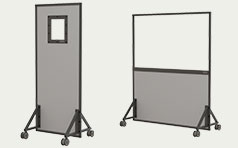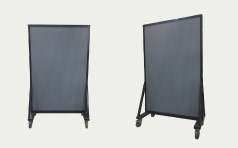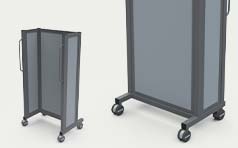

Angled Mobile Lead Barriers

Mobile, angled radiation shielding designed to provide convenient protection for medical personnel during imaging and nuclear medicine procedures.


Key features and benefits


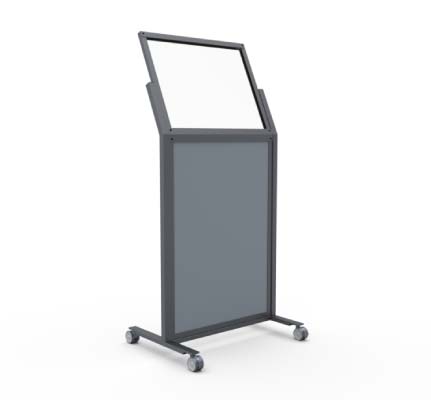
  • Fixed 25-degree angled barrier design – positions shielding to help protect staff during procedures


  • Fully assembled construction – allows immediate use without on-site assembly


  • Heavy-duty casters – provide balance, stability, and smooth mobility during repositioning


  • ABS plastic exterior panels – support easy cleaning, disinfection, and routine maintenance


  • Custom sizing available – allows barrier dimensions to be tailored to room layouts


  • Custom lead thickness options – supports project-specific radiation protection requirements


Product overview


Angled mobile lead barriers are designed to provide flexible, mobile radiation shielding for medical personnel working in nuclear medicine and imaging environments. The barriers are fixed at a 25-degree angle, positioning the shielding to help protect staff while maintaining clear sightlines and workflow access during procedures.


Each barrier comes fully assembled, allowing it to be placed into service immediately. Heavy-duty casters provide stability while still allowing the barrier to be moved easily as room layouts or procedures change. The exterior is finished with ABS plastic panels, which are easy to clean and disinfect as part of routine infection control practices.


Because clinical spaces and shielding needs vary, these mobile barriers are available with custom sizing and lead thickness options. They are intended to be used as part of a broader radiation protection strategy and should be coordinated with room layout, equipment positioning, and fixed shielding elements. The barriers support staff protection but do not replace room-level shielding requirements.


When to use this product


Use this product when:


  • Mobile radiation shielding is required for staff protection


  • Fixed shielding is not practical for all procedures


  • Barriers must be repositioned frequently during workflows


  • Easy-to-clean surfaces are required in clinical areas


  • Custom barrier dimensions or shielding levels are needed


Where this product is typically found


These barriers are commonly used in:


  • Nuclear medicine procedure rooms


  • Imaging and interventional suites


  • Radiopharmacy support areas


  • Hospital nuclear medicine departments